


Shot Down Over Hannoi – S8, Episode 71
Retired Col. Thomas Kirk shares his story of surviving solitary confinement for two years as a prisoner of war at the “Hanoi Hilton.”
Listen Anywhere! Apple | Spotify | All Players
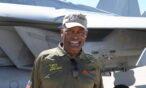
In this episode, Host Rick Crandall talks with Tom, a fighter pilot, squadron commander, and Vietnam War POW. From one of the most intense air-combat battlefields in history to the harrowing story that followed, Kirk explores what it took to persevere through the unthinkable. There is a lot to learn!

The Big Picture:
On October 28, 1967, Kirk led one of the largest U.S. Air Force strike packages of the war aimed at Hanoi. He was hit during the bomb run but stayed with the mission long enough to release his payload before attempting to move south, out of the heavily defended airspace. He made it 27 miles before ultimately losing control and ejecting. What followed was five and a half years as a prisoner of war, including long stretches of solitary confinement inside Hỏa Lò Prison, which American POWs nicknamed the “Hanoi Hilton.”
Why It Matters:
Kirk’s story matters because of its history and the way he tells it. He does not treat combat as a spectacle or turn suffering into performance. He speaks candidly while reflecting on impactful events and the effort to hold onto routine, memory, and self-respect while imprisoned. This is not a glamorous story, and he does not recall it as such.

The Republic F-105:
The Thunderchief was built during the Cold War as a long-range, supersonic strike aircraft designed around nuclear delivery. It was large for a single-seat fighter, had a top speed of approximately Mach 2, and a maximum bomb load capacity of about 14,000 pounds. When the war in North Vietnam demanded an airplane that could carry substantial ordnance deep into defended territory, the F-105 became the Air Force’s principal attack platform.
This newfound operational importance came with severe attrition, as the aircraft was sent repeatedly into one of the densest air defense systems in the world. Sources vary on the exact numbers, but hundreds of Thunderchiefs were lost in Vietnam, and around 40 percent of the type’s total production was destroyed.

Col. Kirk’s Backstory:
Tom grew up in a working family based in Virginia. His first love was music, and he played saxophone and clarinet, joined the musicians’ union as a teenager, and performed with major big bands. That early discipline surfaces again later, in one of the darkest parts of his life, when music became something he could return to mentally, even when nearly everything else had been taken away.
His route into military aviation was not linear, and he even recalls never having stepped foot in an airplane before flight training. He joined when the Air Force was moving from propeller aircraft into jets, flew in Korea, pushed to get into fighters, and built a long operational career before Vietnam. By the time he arrived in Southeast Asia, he was a well-seasoned pilot.
The Air War Over North Vietnam:
Strike aircraft had to contend with anti-aircraft artillery, surface-to-air missiles, and MiG fighters. Ground fire was especially deadly, with more than 83 percent of USAF combat losses in Vietnam caused by anti-aircraft guns. In 1967 alone, the Air Force flew more than 100,000 sorties, and losses mounted steadily as crews pressed missions against heavily defended targets.
Kirk recants his personal experience flying into those conditions over Hanoi:
“Picture the worst Fourth of July celebration of fireworks you’ve ever seen, and you’re right in the middle of all of that diving down against the target.”
October 28, 1967:
On this day, Tom was leading one of the largest strike packages of the war in an F-105 and was hit about a third of the way through the bomb run. Even though the aircraft was already damaged, he still released the payload before pulling off target.
Having fulfilled his mission, his new goal was to get about 50 miles south of Hanoi and reach an area where helicopters could potentially rescue him. During his short flight, controls and instruments stopped responding, and the airplane started descending rapidly. He ejected at around 500 miles per hour and was knocked unconscious multiple times. As he neared the bottom of his descent, he realized captivity was imminent.

Capture:
After landing, Kirk was quickly apprehended and beaten by civilians before North Vietnamese soldiers took control. He was brought to Hỏa Lò Prison, the most infamous prison used to hold POWs. Originally built by the French colonial administration between 1886 and 1901, it long predated the war and became a central symbol of the American prisoner experience.
Early captivity was often the harshest and included isolation, interrogation, and torture. Tom describes the first 28 days in captivity as the worst period of his life. He did not know whether he would live, go home, or if his family knew he was alive. Like his fellow Americans, he broke under pressure and gave statements of some kind, many of which were false. Kirk says there was a point in that first month when he had to make a decision internally,
“One day, it was about 28 days in, I just said, you’ve got to get it together. Dig deep. You’ve got to do something to endure this and go home someday.”
Life in Captivity:
After shoving a guard who had struck him, Kirk was punished with nearly two years of solitary confinement.
He found ways to impose routine on empty time. He exercised in the confined space he had, built mental structure into days that otherwise could have dissolved into sameness, and returned to music. With his musical background, he could practice mentally and physically by fingering a wooden stick, even without an instrument. Those tactics gave him something disciplined, familiar, and personal to do in a place designed to strip away all three.
He also relied on memory. In the absence of books, writing materials, clocks, or conversation, the mind became both refuge and tool. He recalls,
“When you have nothing to do, nowhere to go, no timer, you can resurrect things in your head that you can’t dream of now. I could pull up things that happened to me when I was three and a half years old. Mom would dress me to take me to town and stuff like that, that I can’t begin to think about right now.”
The Importance of Communication:
The Tap Code was a simple but powerful system used by American prisoners of war during the Vietnam War to maintain contact despite strict isolation. Adapted from a traditional 5×5 letter grid, prisoners tapped sequences on walls or pipes to spell words one letter at a time, replacing “K” with “C” to fit the format. Though slow, it allowed prisoners to share names, exchange encouragement, tell stories, and connect with one another. Over time, the code became a lifeline that helped sustain morale and unity across prison compounds.
As new inmates entered the Hanoi Hilton, senior prisoners would spread and teach the cipher. Even under harsh conditions and constant surveillance, the Tap Code helped prisoners preserve discipline, coordinate responses, and remind one another that they were not alone. It became one of the most enduring symbols of resilience among American POWs in North Vietnam.

Operation Homecoming:
American POWs began returning stateside in 1973 as part of Operation Homecoming. Kirk remembers the release process in concrete details, from the quiet bus to new clothes, arriving at the airport, the sight of the C-141 landing, and the emotion on the aircraft once the wheels were finally off the ground. The larger repatriation included 591 U.S. prisoners released between February and March 1973.
He also remembers recovery as practical and immediate, with food, medical care, glasses, and dental work provided. Uniforms with medals were prepared for the trip home, where he was finally reunited with his family.
Post-Vietnam Career:
Shortly after his journey home, Tom returned to service, where he commanded a wing, served at Lowry Air Force Base (where our museum stands today), and went on to build a substantial life in retirement through business, sailing, family, and community.
Every day above ground, Kirk says, is a great day.

Frequently Asked Questions:
Why was the F-105 so important in Vietnam?
It carried a heavy bomb load, could fly deep into defended airspace, and flew a huge share of Air Force strike missions over North Vietnam.
What was the Hanoi Hilton?
It was the American nickname for Hỏa Lò Prison in Hanoi, where many U.S. POWs were held during the Vietnam War.
How did POWs communicate?
Primarily through the Tap Code and, when possible, hand-signal systems. These methods helped preserve morale, organization, and contact between prisoners.
Did conditions in North Vietnamese prisons stay the same throughout the war?
No. The harshest years were earlier in the war. Treatment eased somewhat beginning in late 1969, and later prisoner consolidation improved communication and morale.
Go Deeper:
Want more Behind the Wings?
Peek into the cockpits of rare warbirds and spacecraft, hear from aerospace experts and more in our episodic documentary series!
Learn more