




F-15, F-16 or F-22? A General’s Verdict – S8, Episode 77
Brigadier General Micah “Zeus” Fesler shares stories about flying the F-15 and F-22, traces Colorado fighter aviation from early biplanes to the F-16, and today’s homeland defense mission.
Listen Anywhere! Apple | Spotify | All Players
In this episode, Host Rick Crandall talks with “Zeus” about the aircraft, missions, training, and people that shaped his military career, including combat operations, Weapons School, and the Colorado Air National Guard. From the 120th Observation Squadron’s early Jennys to Buckley’s ongoing alert mission, Micah offers a wide-ranging look at fighter aviation and the community behind it. This one is going to be cool!

Colorado’s Fighter Aviation Role:
Since September 11, 2001, Buckley Space Force Base and the Colorado Air National Guard have maintained an alert mission, ready to respond when aircraft or other threats require immediate attention. As Fesler explains, Colorado’s role also involves protecting NORAD and U.S. Northern Command, which oversee aerospace defense and homeland defense operations.
That makes the mission both local and national. The aircraft may launch from Colorado, but the responsibility reaches across the United States and Canada.
A Brief History – From Jennys to F-16s:
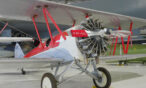
Colorado military aviation began with aircraft that were barely suited to the state’s altitude and weather. In the early 1920s, the 120th Observation Squadron flew Curtiss JN-4 “Jenny” biplanes at a time when pilots had to work around density altitude, turbulence, and limited engine power. At a mile above sea level, even getting airborne was part of the challenge.
That early history still matters to the unit today. New lieutenants in the squadron are nicknamed “Jenny” before receiving their official call signs, a small but meaningful nod to the first aviators who flew from Colorado more than a century ago.
The 120th would go on to fly newer aircraft including the F-100, A-7, and F-16. Today, the Viper remains one of the most flexible aircraft in the Air Force inventory. Fesler describes it as a true “multi-tool,” capable of air-to-air missions, close air support, and a wide range of combat tasks.

The Guard’s Community Values:
For Fesler, the Air National Guard is part of the Colorado community, not just a military force.
Members serve overseas, sit alert at home, support domestic missions, and return to their civilian employers, families, schools, and neighborhoods. They are pilots, maintainers, students, neighbors, and volunteers. Fesler describes them simply: “You’re us, we’re you.”
That connection is one of their greatest strengths. The same airmen who maintain and fly aircraft at Buckley may also respond to fires, disasters, and other emergencies across the state. Their experience stays in the Guard, while service stays rooted in Colorado.

The F-15, F-16 and F-22:
Zeus’ career gives listeners a rare comparison across three iconic fighters.
The F-15C taught discipline. As an air superiority aircraft, it demanded precise radar work, stick-and-rudder skill, and relentless debriefing. In Fesler’s words, “the smallest thing that can create the biggest problem.”
For Micah, the F-16 opened a deeper air-to-ground world, including targeting pods, close air support, communication with troops, and the challenge of understanding the big picture while keeping friendly forces safe. However, he spent the majority of his flying career in the Eagle and Raptor.
The F-22 forever changed the air battlefield. With stealth, sensor fusion, and battle management capabilities, the aircraft allowed pilots to better understand and manage the fight. Instead of spending as much effort operating individual systems, aviators could focus on the wider battlespace.
Together, they show how fighter aviation has moved from the mechanical feel and radar discipline of fourth-generation aircraft toward the information management, adaptability, and integrated teamwork that define fifth-generation jets.

Combat, Training and Adaptability:
Fesler’s account of his final combat sortie in the F-22 offers a vivid look at the aircraft’s role in modern air conflicts and the skill required to fly it effectively. Over Iraq and Syria, he worked alongside F-16s, tankers, AWACS, remotely piloted aircraft, command-and-control teams, and a joint terminal attack controller while responding to ISIS targets and later Russian activity.
The story illustrates one of the central lessons of this episode: plans matter, but the real work is adapting when circumstances change.
That same lesson shaped Micah’s time at the U.S. Air Force Weapons School. Training was designed to push airmen toward difficult problems and even failure, forcing them to think, adjust, and solve. The goal was not simply to follow a script. It was to build pilots and leaders who could stay calm, understand the situation, and act when the fight shifted.

Aerial Demonstration History:
Fesler’s aviation story began at an airshow, when a Harrier pilot took the time to talk with him as a child. That moment stayed with “Zeus” and helped point him toward a life in aviation.
That same power of connection runs through Colorado aviation history. In the 1950s, the Colorado Air National Guard’s 120th created the Minute Men, an early aerial demonstration team that performed across the United States and even in South America. Flying F-86 Sabres, they helped establish a proud Colorado connection to military airshow traditions.
Micah notes that the Air Force later formed the Thunderbirds, whose own demonstration legacy is now recognized around the world. For visitors standing near Wings Over the Rockies’ Thunderbird F-16D, that history creates a direct line from Colorado’s early demonstration team to one of the most recognizable names in aviation.
The Power of Storytelling:
This episode is a reminder of why museums, airshows, demonstration teams, and historical exhibits matter. A child standing beside an aircraft may not yet understand every system or mission, but they can still feel the possibility, meet the people behind the machines, and imagine a future they had never considered.
Wings Over the Rockies not only preserves aircraft but also tells the stories of the people and choices that give them meaning.

Frequently Asked Questions:
Why does the Colorado Air National Guard’s early history matter?
Their legacy connects today’s airmen to the state’s first military aviators, who flew Curtiss JN-4s in the early days of flight. That heritage remains part of the unit’s identity and Colorado’s aviation story.
What makes the F-16 Fighting Falcon a vital fighter today?
The F-16 remains important because of its flexibility. Zeus describes it as a versatile “multi-tool,” capable of air-to-air combat, air-to-ground operations, close air support, and employing a wide range of weapons.
What made the F-22 Raptor different from earlier fighter aircraft?
The F-22 changed aviation through stealth, speed, maneuverability, and sensor fusion. Instead of forcing pilots to manage separate systems, the aircraft combines information into displays that help aviators understand and manage the larger fight.
Why is Buckley Space Force Base important to homeland defense?
Buckley supports Colorado’s air defense alert mission and helps protect NORAD and U.S. Northern Command, which oversee aerospace defense and homeland defense operations.
Go Deeper:
Want more Behind the Wings?
Peek into the cockpits of rare warbirds and spacecraft, hear from aerospace experts and more in our episodic documentary series!
Learn more