



Flying Soviet MiGs in the Nevada Desert – S8, Episode 74
Rob “Z-Man” Zettel shares his story from inside one of the Air Force’s most classified Cold War programs, Project Constant Peg.
Listen Anywhere! Apple | Spotify | All Players
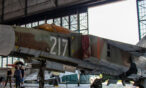
In this episode, Host Rick Crandall talks with Z-Man, a retired U.S. Air Force fighter pilot and former member of the legendary 4477th Test and Evaluation Squadron, the “Red Eagles,” about what it was like to fly real Soviet MiG fighters in the Nevada desert. From the F-4 Phantom and F-5 aggressors to the MiG-21 and MiG-23 at Tonopah Test Range, Zettel offers a firsthand look inside the classified program designed to train American pilots against the real thing. This one is going to be cool!

The Big Picture:
During the Cold War, some of America’s best fighter pilots trained against real Soviet-designed MiGs, something they hoped to never see up close.
The program was called Project Constant Peg. Based at Tonopah Test Range in Nevada, it allowed U.S. pilots to fly against MiG-17s, MiG-21s, and MiG-23s in a controlled training environment. For many aircrews, it was the first time they saw a MiG not in a briefing, but turning, climbing, accelerating, and fighting in the sky.
Why the Program Was Created:
American fighter aircraft were advanced, but early air combat results showed that technology alone was not enough. Many pilots had limited experience fighting smaller, more agile aircraft like the MiG-17 and MiG-21. Early F-4 Phantoms also lacked an internal gun, reflecting a belief that missiles would dominate future air combat.
After Vietnam, the U.S. military invested heavily in more realistic training, including TOPGUN, expanding aggressor squadrons, and Red Flag exercises. If American pilots might face MiGs in combat, they should train against them before going to war.

The Red Eagles:
Project Constant Peg was operated by the 4477th Test and Evaluation Squadron, known as the Red Eagles. From 1979 to 1988, the unit flew secretly acquired MiGs from the Tonopah Test Range.
Tonopah was remote, secure, and close to major training areas, including Nellis Air Force Base and the Nevada Test and Training Range. That made it a practical location for a classified flying program. MiGs flew during the day while the F-117 stealth fighter program operated at night.
The program remained classified until 2006, and some details are still need-to-know knowledge today.
Rob Zettel’s Background:
Rob did not grow up in a military aviation family. His interest in flying began with books, model airplanes, and watching aircraft overhead. After earning his commission through Air Force ROTC, he entered pilot training and eventually flew the F-4.
The Phantom was a demanding aircraft, and Zettel credits it with helping him understand energy management, discipline, and respect for an aircraft’s limits. He later moved into the aggressor community, where U.S. pilots trained by flying as adversaries.
That experience eventually led him to the Red Eagles, where pilots could not simply apply to Constant Peg. They were selected from experienced fighter communities, including aggressors, Weapons School, TOPGUN, and Marine Corps units.
When Zettel first arrived at Tonopah, the aircraft were hidden in hangars. During his first tour, he saw rows of MiG-21s parked nose to nose, some under maintenance and others being prepared to fly, including MiG-23s.
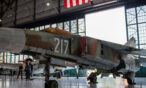
At the height of the program, Constant Peg operated 17 MiG-21s and 10 MiG-23s. Some aircraft came from overseas, while others were Chinese-built F-7s, closely related to the MiG-21.
For Zettel, seeing the aircraft in person was a major shift. He had studied threats and flown as an aggressor, but this was different. These were the real aircraft pilots had spent years learning about from a distance.

Flying Without a Simulator:
There were no two-seat trainer versions for new pilots, who had to study the cockpit, learn emergency procedures, complete taxi checks, and then make their first flight with another aviator chasing in a T-38.
The cockpits were unfamiliar, labels were often in Cyrillic, instruments used different units, and gauges were arranged differently from American fighters. Visibility, especially in the MiG-23, was limited.
Still, the Red Eagles learned to fly the aircraft safely and effectively. Their job was not to imitate Soviet pilots exactly, but rather to show U.S. aircrews what the aircraft could do when flown by experienced fighters.
MiG-21 and MiG-23 Training:
The MiG-21 was small, quick, and difficult to judge visually. Its narrow shape made it hard for pilots of larger American aircraft to estimate distance and energy, especially when they saw it nose-on. It could turn hard, but it also lost speed quickly.
The MiG-23 was faster and more powerful, but less maneuverable. It could reach impressive speeds, but it had limits in a turning fight and at high angles of attack. Zettel described it as an aircraft that required respect.
Aircrews arrived at Nellis, were read into the program, and trained for about a week. They began with briefings and then came performance demonstrations, basic fighter maneuvers, and more complex engagements.
One goal was to reduce “buck fever,” the hesitation or surprise that could happen when a pilot saw an enemy aircraft for the first time. Constant Peg moved that first look from combat into training.
By the end of the week, the MiG was no longer mysterious. Pilots understood its strengths, its weaknesses, and what mistakes to avoid.

Why Constant Peg Still Matters:
The Red Eagles flew about 15,500 MiG sorties and provided nearly 6,000 training exposures for U.S. aircrews.
Its central lesson remains relevant, showing that realistic training matters. Aircraft, sensors, and weapons change, but pilots still benefit from seeing threats as clearly and realistically as possible before they face them in combat.
Project Constant Peg is an important Cold War aviation story not only because it was secret, but because it was practical. It took a real problem, built a training solution around it, and helped turn uncertainty into readiness.

Frequently Asked Questions:
Why was Tonopah Test Range used for Constant Peg?
Tonopah was remote, secure, and close to major training areas in Nevada. That made it useful for classified flight operations while still allowing access to Nellis Air Force Base and nearby ranges.
What did pilots mean by “buck fever”?
In this context, “buck fever” meant the surprise or hesitation a pilot might experience when seeing a real enemy aircraft for the first time. Constant Peg helped pilots get past that reaction before combat.
How did a typical Constant Peg training week work?
Pilots were briefed, introduced to the MiGs, shown performance demonstrations, and then moved into increasingly realistic air combat training. The process was designed to build confidence step by step.
Go Deeper:
Want more Behind the Wings?
Peek into the cockpits of rare warbirds and spacecraft, hear from aerospace experts and more in our episodic documentary series!
Learn more