




How the F-14 Revolutionized Carrier Combat — S9, Episode 83
Former Navy fighter pilot Mike “Thumper” Bonner takes us inside the F-14 Tomcat, from high-speed dogfights and carrier landings to the technology that made it one of the Navy’s most formidable fighters.
In this episode, Host Rick Crandall talks with former Navy fighter pilot Mike “Thumper” Bonner about flying the legendary F-14 Tomcat. From Cold War intercepts and aircraft carrier operations to developing the advanced F-14D, Bonner shares what it took to fly, fight and train in one of naval aviation’s most recognizable aircraft. This one is going to be cool!

Built to Defend the Fleet
Few fighter jets are as recognizable as the Grumman F-14 Tomcat. With its twin engines, distinctive variable-sweep wings and starring role in the 1986 film Top Gun, the F-14 became an icon of American naval aviation.
But the Tomcat was much more than a Hollywood star. Designed during the Cold War, the F-14’s primary mission was to protect U.S. Navy aircraft carrier groups from enemy aircraft and long-range missile attacks. Its powerful radar, long-range AIM-54 Phoenix missiles and exceptional speed allowed crews to intercept threats far beyond the carrier.
For Mike “Thumper” Bonner, flying the Tomcat was the realization of a childhood dream. Bonner knew he wanted to become a pilot at just eight years old. After studying aeronautical engineering at the University of California, Davis, and joining Navy ROTC, he earned his wings and received his first-choice assignment: flying F-14s on the West Coast.
His timing couldn’t have been better. Bonner watched Top Gun while awaiting his assignment, then headed to Naval Air Station Miramar, the very base featured in the movie. His first impression of the real aircraft was simple: it was enormous. Once he began flying it, something else stood out. Despite its size and weight, the Tomcat was incredibly fast. Even after flying the F/A-18 Hornet and F-16 Fighting Falcon, Bonner says the F-14D remained the fastest fighter he had ever flown.

Why the F-14’s Wings Were Different
One of the Tomcat’s defining features was its variable-sweep wing design. Unlike conventional fighter aircraft with fixed wings, the F-14 could change the angle of its wings during flight. At high speeds, the wings swept backward to reduce drag. At lower speeds, they extended forward to improve lift and maneuverability. The system allowed the Tomcat to perform two very different missions: intercepting distant threats at high speed and maneuvering against enemy fighters in close combat. Bonner recalls using the wing system to his advantage during air combat training.
In one tactic, he would manually sweep the wings backward before approaching an opposing aircraft. Other pilots familiar with the Tomcat might assume the swept wings indicated a high airspeed. But Bonner could actually be flying much slower. At the moment the aircraft met, he would return the wings to automatic control, allowing them to extend and helping the Tomcat make a tighter turn. It was one of many techniques Tomcat pilots used to remain competitive against smaller fighters.
Bonner also explains how the F-14 compared with other aircraft he flew. He preferred the F-16 for certain high-speed dogfighting situations and the F/A-18 at lower speeds. But for long-range fleet defense, he considered the Tomcat unmatched among the aircraft in his experience.

Two Aviators, One Aircraft
The F-14 had another major advantage: two crew members. While the pilot controlled the aircraft, the Radar Intercept Officer (RIO) operated much of the radar, navigation and weapons systems from the rear cockpit. This division of responsibilities was especially important during long-range interceptions, when crews needed to track potential threats, manage complex radar information and coordinate weapons employment.
The RIO also played a critical role during close-range dogfights. With an additional set of eyes looking for opposing aircraft, monitoring airspeed and calling out important flight information, the pilot could concentrate on maneuvering. For new Tomcat pilots, the Navy often paired them with experienced RIOs. These partnerships helped crews develop communication habits and learn each other’s tendencies. Bonner credits his first-cruise RIO, Pete McGarvey, with helping him become a safer and more consistent carrier pilot.
That teamwork became especially valuable during one of naval aviation’s most demanding operations: landing aboard an aircraft carrier.

Landing an F-14 on an Aircraft Carrier at Night
Imagine approaching a moving aircraft carrier in the middle of the Pacific Ocean on a moonless night. There are few visual references outside the cockpit. The flight deck is relatively small, the aircraft is moving quickly and the pilot must maintain precise control throughout the approach.
For Bonner, nighttime carrier landings were among the most demanding experiences of his flying career. He describes how pilots could return from an intense mission only to face an equally stressful challenge while landing. On particularly dark nights, there was almost no visible horizon to provide a sense of orientation. Pilots had to rely heavily on their instruments, training and communication with their RIO. Even after a successful landing, Bonner remembers occasionally climbing out of the aircraft with his knees shaking from the concentration required.
Daytime operations were a different story. In good weather, he loved the rhythm of approaching the ship, executing a carrier break, turning onto final approach and catching an arresting wire. Launching from the carrier was another unforgettable experience. Bonner compares the initial force of a catapult launch to being struck from behind by a car. The acceleration builds rapidly before the aircraft reaches the end of the deck and the pilot takes control in flight.
The process required complete trust in the aircraft, the catapult system and the carrier’s flight deck crew.

How the F-14D Changed the Tomcat
Bonner’s career placed him at the center of one of the Tomcat’s most significant upgrades: the introduction of the F-14D. The original F-14A used Pratt & Whitney TF30 engines, which could experience compressor stalls during certain aggressive maneuvers. Later versions introduced more powerful General Electric F110 engines, improving performance and giving pilots greater confidence during demanding maneuvers.
The F-14D went much further. It featured improved engines, a more capable AN/APG-71 radar, digital avionics and an upgraded cockpit. These improvements expanded the aircraft’s capabilities and reduced some of the workload associated with earlier models. Bonner became an F-14D introduction pilot while serving as an instructor at VF-124 at Miramar. Working alongside test and evaluation organizations, he helped develop training programs, tactics manuals and procedures for pilots and RIOs transitioning to the new aircraft.
He also participated in the first F-14D two-aircraft section to attend the Navy Fighter Weapons School, better known as TOPGUN. The experience prepared him for his next assignment with VF-11, where he served as a weapons and tactics officer and deployed aboard USS Carl Vinson. His work helped turn the Tomcat’s new technology into practical tactics that aircrews could use during operational missions.

Training Against Real Soviet Fighters
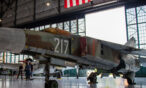
One of Bonner’s most memorable experiences came through Constant Peg, a once-classified training program that allowed American fighter pilots to fly against actual Soviet-designed aircraft. During his training, Bonner encountered MiG-17 and MiG-21 fighters. He had studied their performance characteristics, but seeing them in the air revealed something that technical manuals could not fully convey: just how small and difficult to spot these aircraft were.
The experience gave him a deeper appreciation for American fighter pilots who had faced similar aircraft during the Vietnam War. It also reinforced one of the most important lessons in air combat: maintaining visual contact with an opponent. Bonner learned how quickly a small fighter could disappear against the sky and how an aircraft’s shape and viewing angle affected its visibility.
Those lessons became especially relevant during a later deployment aboard USS Nimitz. While conducting intercepts in the Sea of Japan, Bonner and McGarvey approached what they initially expected to be another Soviet bomber or reconnaissance aircraft. Instead, they encountered a much smaller Su-15 Flagon fighter. The encounter developed into an unplanned aerial maneuvering engagement. Bonner and McGarvey eventually maneuvered behind the Soviet aircraft before the two crews separated. No weapons were fired.
For Bonner, the encounter demonstrated the value of realistic training. Having already practiced against smaller Soviet-designed fighters, he was better prepared to recognize and respond to an unexpected situation.

The F-14 Tomcat’s Lasting Legacy
The U.S. Navy retired the F-14 in 2006, ending more than three decades of Tomcat operations. Its legacy extends beyond its combat record or its popularity in Top Gun. The aircraft demonstrated how advanced engineering, adaptable technology and highly trained crews could work together to meet changing military requirements. For Bonner, the Tomcat remains especially meaningful. He accumulated approximately 1,800 flight hours in the aircraft and credits it with carrying him safely through years of demanding operations.
His stories also remind us that an aircraft’s capabilities are only part of its history. Behind every mission are pilots, RIOs, maintainers, engineers and countless others whose work makes flight possible.
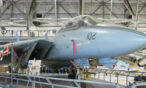
Today, visitors can see an F-14 Tomcat up close at Wings Over the Rockies Air & Space Museum in Denver, Colorado.
Standing beside the aircraft offers a new appreciation for its remarkable size, distinctive wings and the people who flew it.

Frequently Asked Questions
What was the F-14 Tomcat designed to do?
The F-14 was originally developed as a long-range fleet defense fighter for the U.S. Navy. Its primary mission was to intercept enemy aircraft and protect aircraft carrier groups from aerial threats, including aircraft carrying anti-ship missiles.
Why did the F-14 have moving wings?
The F-14’s variable-sweep wings allowed it to adapt to different flight conditions. Sweeping the wings backward reduced drag at high speeds, while extending them forward improved lift and maneuverability at lower speeds.
What did the RIO do in an F-14?
The Radar Intercept Officer operated many of the Tomcat’s radar, navigation and weapons systems. The RIO also assisted with situational awareness, communication and flight monitoring, making the F-14 a highly coordinated two-person aircraft.
What made the F-14D different from earlier Tomcats?
The F-14D introduced improved General Electric engines, the AN/APG-71 radar, digital avionics and upgraded cockpit systems. These changes improved aircraft performance, situational awareness and weapons capabilities.
What was Project Constant Peg?
Constant Peg was a classified U.S. military training program that gave American pilots opportunities to fly against actual Soviet-designed fighters, including MiG-17s and MiG-21s. The program helped pilots understand the performance and limitations of potential adversaries.
When was the F-14 Tomcat retired?
The U.S. Navy retired the F-14 Tomcat in September 2006. The aircraft had served for more than three decades, evolving from a dedicated fleet defense interceptor into a versatile fighter capable of air-to-air and air-to-ground missions.
Where can I see an F-14 Tomcat?
You can see an F-14 Tomcat at Wings Over the Rockies Air & Space Museum in Denver, Colorado. The museum’s aircraft collection provides visitors with an opportunity to explore the history and technology of naval aviation.
Go Deeper
- Behind the Wings Podcast – Listen to the full episode and explore more aviation and space stories.
- Wings Over the Rockies Air & Space Museum – Plan your visit and explore the museum’s aircraft collection.
- National Naval Aviation Museum – Learn more about the history of U.S. naval aviation.
- National Museum of the U.S. Air Force – Explore additional aircraft history, Cold War aviation and military technology.
Want more Behind the Wings?
Peek into the cockpits of rare warbirds and spacecraft, hear from aerospace experts and more in our episodic documentary series!
Learn more